Attractions and Via Francigena
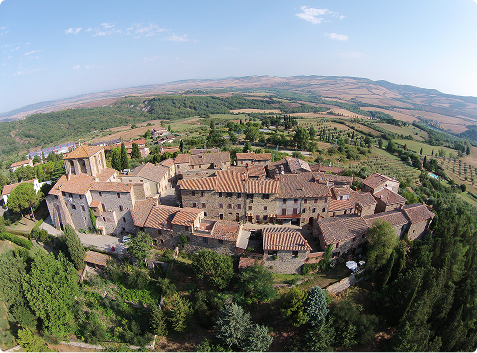
From the majestic Fortress that dominates the Val d’Orcia to theAstronomical Observatory that opens its gaze to the stars, via the spirituality of the Via Francigena and the quiet of the Isabella Woods: Radicofani is home to places that capture the eye and the soul. These include Le Robbiane, capable of preserving sacred art in delicate forms or, again, La Bottega, which celebrates the creativity and know-how of the area. Are you ready to be surprised?
Astronomical Observatory
Radicofani’s sky, among the darkest and most pristine in Europe, gave birth to the “Val d’Orcia Star Park.” Here, in 2024, the Monte Calcinaio Astronomical Observatory, equipped with a state-of-the-art telescope, was inaugurated. The facility combines scientific research, culture and astrotourism, offering a unique experience under the stars.
Forest Isabella
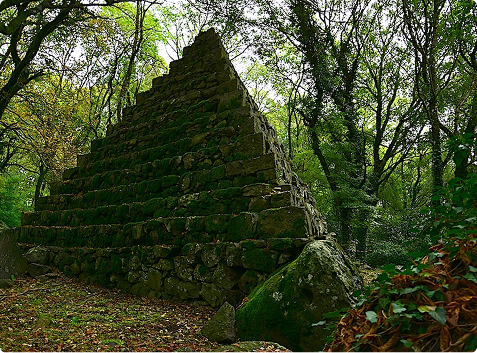
Radicofani’s vocation for hospitality finds its greatest expression in such symbolic places as the Bosco Isabella and Palazzo Luchini. The Bosco is a romantic and Masonic garden created by the Luchini family, rich in symbolism and exotic species. The Palace, home to artists and intellectuals, was a center of cultural life that welcomed such illustrious names as De Chirico and D’Annunzio.
The Fortress
The Fortress of Radicofani, known as the “Vedetta della Val d’Orcia,” stands on an ancient volcanic cliff that is among the most striking in central Italy. Built in the 12th century and at the center of centuries-long disputes between the papacy, Siena and the Medici, it is now an imposing medieval symbol. From the top of its keep there is a breathtaking panorama of Tuscany, Umbria and Lazio.
The Via Francigena
Radicofani is a historic stop on the Via Francigena, a strategic crossroads of spirituality, trade and power. Its location and fortifications made it a landmark for pilgrims, soldiers and merchants. Even today, the village retains tangible signs of its crucial role in the journey to Rome. Find out more at https://viafrancigena.visittuscany.com/site/it/
The Robbiane
Della Robbia’s precious terracottas testify to the artistic and spiritual vitality associated with the Via Francigena. The works of Andrea Della Robbia and his pupils, displayed in Radicofani’s churches, reflect thereligious and cultural importance of the place in the Middle Ages. Prominent among them are dossals and Marian statues, rich in symbolism related to devotion and the welcoming of pilgrims.
The Shop
The Osteria Grossa was an imposing stopping point along the Via Francigena, hosted illustrious travelers from popes to writers such as Stendhal and Dickens, and became a Post Station until the 19th century. The building is a historical and architectural symbol of Radicofani, celebrated in the diaries of many travelers.
The Medicean Post
One of the most significant examples of a Renaissance post station in Tuscany, commissioned by the Medici in the 16th century,the Posta Medicea tells a fundamental page in the history of communications and transportation in central Italy. The structure was created to provide refreshment for travelers along the trade and postal routes that connected Rome and northern Europe.